

Artificial intelligence has moved rapidly from experimental innovation to a core driver of digital transformation. Among its most visible applications is AI Chatbot development, which has evolved far beyond basic scripted responses into intelligent, context-aware systems capable of supporting customers, employees, and operations at scale. For businesses considering chatbot adoption, the challenge is no longer whether to build one, but how to choose the right strategy that aligns with long-term goals.
Selecting an effective chatbot approach requires understanding technology capabilities, business readiness, and the role conversational systems play within broader digital ecosystems. Without a clear strategy, chatbot initiatives often fail to deliver measurable value, despite significant investment.
Why Chatbot Strategy Matters More Than Technology
Many organizations begin their chatbot journey by focusing on tools, platforms, or vendors. While technology selection is important, success is primarily driven by strategy. An effective AI chatbot strategy starts by defining the problem the chatbot is meant to solve—whether reducing support volume, improving response times, enabling self-service, or supporting internal teams.
According to a Gartner report,Over 40% of Agentic AI Projects Will Be Canceled by End of 2027.
A well-defined strategy ensures chatbots are designed with purpose, measurable outcomes, and scalability in mind.
Understanding the Business Value of AI Chatbots
Modern chatbots deliver value across multiple business functions. For customer-facing teams, conversational systems can provide instant responses, consistent service quality, and 24/7 availability. Internally, chatbots streamline workflows by assisting employees with HR queries, IT support, and knowledge retrieval.
An AI chatbot for business is most effective when integrated into existing workflows rather than operating as a standalone interface. Organizations that align chatbot deployment with operational goals tend to see higher adoption and stronger ROI.
A 2024 McKinsey study found that companies using AI-driven customer engagement tools reported up to a 20% increase in customer satisfaction scores, reinforcing the impact of well-designed conversational systems.
Choosing the Right Development Approach
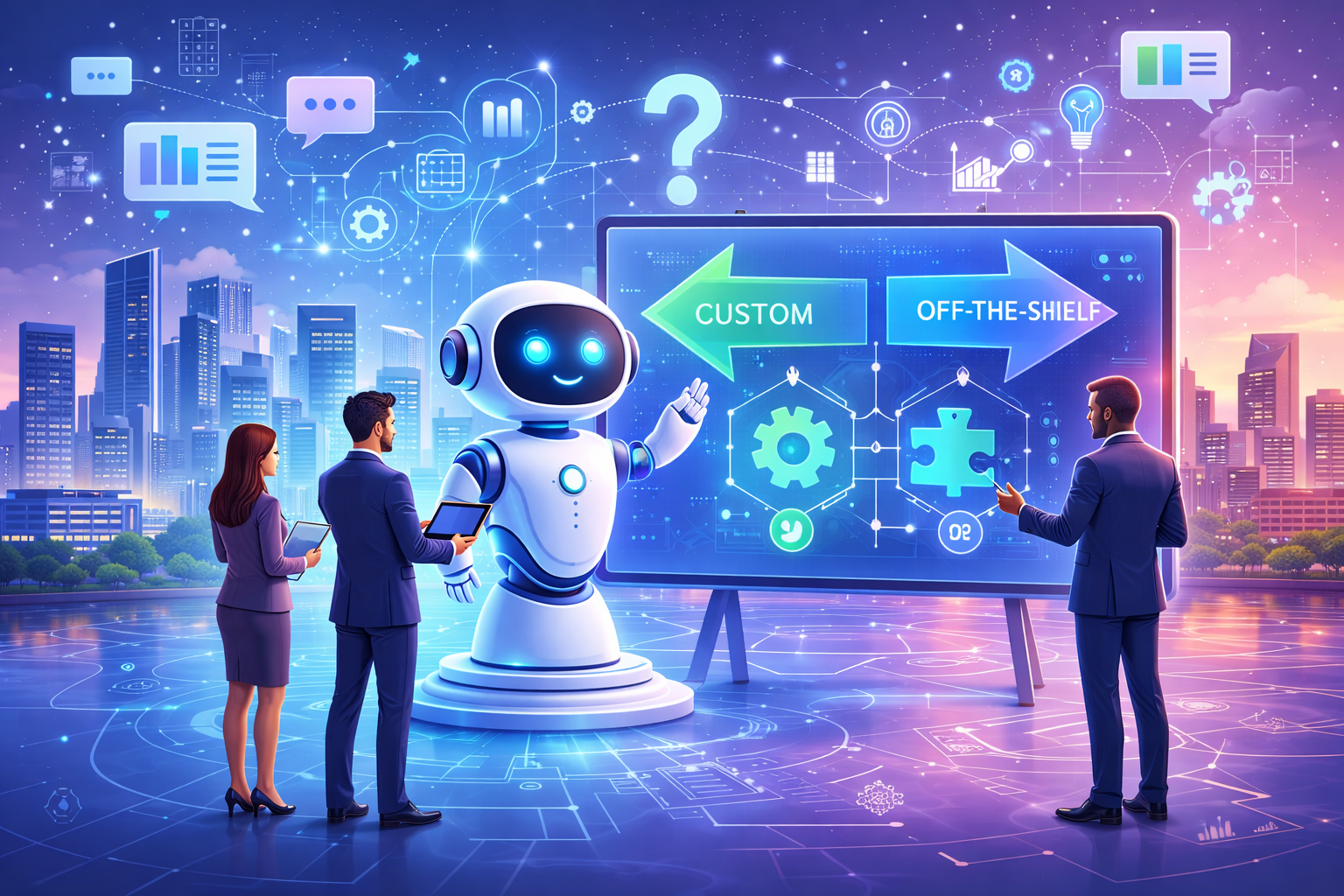
When planning chatbot initiatives, businesses typically evaluate three approaches: off-the-shelf tools, platform-based customization, or Custom Artificial Intelligence Chatbot development. Each option comes with trade-offs related to flexibility, cost, and long-term scalability.
Off-the-shelf solutions offer quick deployment but limited differentiation. Platform-based tools allow moderate customization while maintaining vendor dependencies. Custom development, on the other hand, enables deep alignment with business logic, data models, and brand voice—making it suitable for complex or enterprise-grade use cases.
This is where experienced teams, such as Vegavid, often support organizations during early planning stages. Rather than focusing purely on implementation, the emphasis is on understanding operational context, data readiness, and future expansion requirements before committing to a development path.
Also Read: Key Benefits of Custom Ai Chatbot Development for Enterprises
Core Technologies Behind Modern Chatbots
Advanced chatbots rely on multiple AI disciplines working together. NLP-based chatbot development enables systems to understand user intent, extract meaning from language, and handle variations in phrasing. These capabilities are enhanced through machine learning chatbot solutions, which allow bots to improve performance over time based on real interactions.
Beyond language understanding, modern chatbots incorporate context management, sentiment detection, and fallback mechanisms to ensure reliability. These components are essential for maintaining user trust, especially in regulated or customer-sensitive environments.
Organizations increasingly deploy these capabilities through scalable AI chatbot platforms, ensuring systems can handle growing user volumes without performance degradation.
Integration and Enterprise Readiness
One of the most overlooked aspects of chatbot success is integration. Artificial Intelligence chatbot integration with CRM systems, ticketing tools, ERP platforms, and analytics dashboards allows conversational systems to move from simple Q&A tools to operational assets.
For large organizations, enterprise AI chatbots must also comply with governance standards, security policies, and data privacy regulations. This includes authentication controls, audit trails, and deployment across multiple channels such as web, mobile, and internal tools.
Vegavid often works with enterprises navigating these integration challenges, helping teams design architectures that balance flexibility with control—particularly in environments where chatbots interact with sensitive data or mission-critical systems.
Use Cases That Deliver Real Impact
Successful chatbot initiatives are grounded in practical value. Common AI use cases include customer support automation, lead qualification, appointment scheduling, internal knowledge assistance, and order tracking.
The most effective implementations focus on high-frequency, low-complexity interactions first, gradually expanding capabilities as confidence and adoption grow. This phased approach reduces risk while allowing organizations to measure performance and refine experiences.
Conversational systems built as conversational AI solutions tend to perform better when designed around user journeys rather than isolated questions.
Also Read: AI Chatbot Development for Business: Use Cases, Benefits, and ROI
Security, Compliance, and Trust
As chatbots gain access to sensitive systems and data, security becomes a strategic concern. Secure AI chatbot development involves encryption, role-based access controls, secure API communication, and continuous monitoring.
In regulated industries, compliance with data protection frameworks such as GDPR is non-negotiable. Chatbots must be designed to minimize data exposure, log interactions responsibly, and ensure transparency in automated decision-making.
Consulting-led teams, including Vegavid, often help organizations assess these risks early, ensuring security and compliance are embedded into chatbot design rather than added as afterthoughts.
Measuring Success and Continuous Improvement
Chatbot success is not defined by deployment alone. Ongoing measurement of resolution rates, user satisfaction, deflection metrics, and escalation patterns is critical. Continuous training and optimization ensure chatbots remain accurate as business needs evolve.
Organizations that treat chatbots as living systems—rather than static tools—are better positioned to adapt to changing customer expectations and operational demands. This mindset is central to sustainable AI Chatbot development services, where long-term value outweighs short-term experimentation.
Conclusion
Choosing the right chatbot strategy is ultimately about alignment—between technology, business goals, and user expectations. From defining objectives and selecting the right development model to ensuring integration, security, and scalability, each decision shapes long-term outcomes.
As AI continues to influence customer experience and internal operations, thoughtful planning becomes a competitive advantage. Organizations exploring chatbot initiatives benefit from combining technical expertise with strategic guidance, ensuring solutions are both effective today and adaptable tomorrow.
If you’re evaluating how conversational systems fit into your digital roadmap, a consulting-led approach—such as those supported by Vegavid—can help translate AI potential into practical, measurable business results.
Contact Vegavid.com today!
Also read related blogs –
How No-Code AI Simplifies Development Process?
AI Agent vs Automation: Key Differences & Strategic Value
What’s the Difference Between AI Agents and Chatbots?
AI Consulting: Your Roadmap to an AI-Powered Future
Agentic AI Architecture: The Blueprint for Autonomous Systems
Which Industries Stand to Benefit the Most From AI Agents?
AI Agents for Business | Transform Enterprise Automation & ROI
AI Agent for Large Companies: Complete Enterprise Implementation Guide
AI Agent Development Process in 2026: Complete Guide
AI Agent Development Cost Guide (2026) | Pricing Models & ROI