

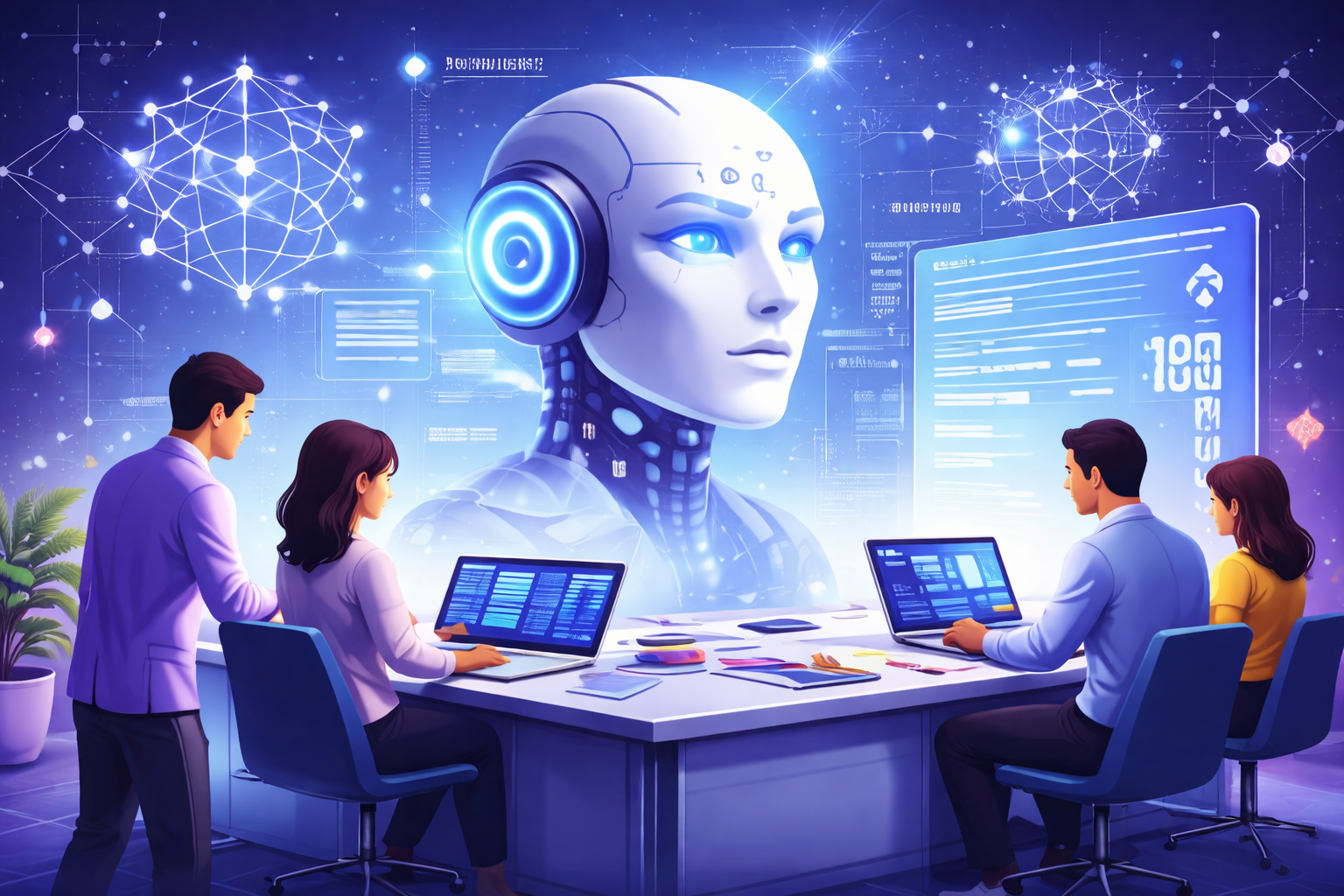
In the modern corporate world, the phrase “data is the new oil” has evolved. While data is indeed a valuable raw resource, its true worth is only realized when refined into actionable intelligence. For many organizations, the sheer volume of information—ranging from consumer behavior patterns to complex supply chain logistics—has become overwhelming. This is where a Machine learning development company steps in, acting as the architect that transforms dormant data into a dynamic engine for growth.
By moving beyond simple descriptive analytics (what happened) toward predictive and prescriptive analytics (what will happen and how to respond), these companies allow leaders to make choices based on evidence rather than intuition.This shift isn’t just a technological upgrade; it is a fundamental reimagining of how a business operates in a high-speed global economy.
Bridging the Gap Between Raw Data and Strategy
Most enterprises are currently “data-rich but insight-poor.” They collect millions of data points every day through CRM systems, IoT sensors, and website interactions. However, without the right processing power, this information remains trapped in silos. A specialized Machine learning development service provides the necessary tools to break these silos down.
Machine Learning algorithms are uniquely capable of identifying non-linear relationships within data that the human eye would miss. For example, in a retail environment, an ML model might discover that a specific weather pattern in one region correlates with a surge in demand for a seemingly unrelated product category three days later. These subtle signals, when captured and analyzed, allow businesses to optimize inventory before the trend even hits the mainstream.
Authority and Market Realities: What the Reports Say
The impact of professional machine learning integration is increasingly documented by global research leaders. According to the McKinsey Global Survey on the State of AI in 2025, organizations that have scaled their AI and ML programs are seeing significant bottom-line results, with 64 percent of respondents says that AI is enabling their innovation.The report emphasizes that the most successful “high-performing” companies are no longer just using ML for cost reduction but are leveraging it to transform entire workflows and enter new markets.
Furthermore, a report from Gartner predicts that by 2029, Gartner predicts more than 75% of operations processed in untrusted infrastructure will be secured in-use by confidential computing. Gartner highlights that this transition from “data-driven” to “decision-centric” operations is what allows modern firms to achieve a competitive advantage.The ability to automate granular decisions—such as real-time pricing adjustments or personalized marketing triggers—enables a level of responsiveness that manual processes simply cannot match.
The Strategic Value of a Machine Learning Development Firm
Choosing to work with an external Machine learning development Firm offers a distinct advantage over trying to build complex models in isolation. The primary benefit is access to cross-industry expertise and specialized infrastructure.
Firms like Vegavid help businesses navigate the “data quality” hurdle, which is often the biggest barrier to entry. They don’t just provide code; they provide a comprehensive data strategy. This includes:
- Feature Engineering: Identifying which specific data points (features) are most predictive of a desired outcome.
- Model Explainability: Ensuring that the “black box” of AI is transparent enough for stakeholders to trust the decisions being made.
- Continuous Monitoring: Because data is constantly changing (a phenomenon known as “drift”), professional partners ensure models are regularly retrained to remain accurate.
Enhancing Accuracy in High-Stakes Industries
The drive toward data-driven decision-making is most visible in sectors where the cost of error is high.
- Financial Services: In banking, ML models are used for real-time fraud detection.While traditional rule-based systems might flag any large transaction, a custom ML model looks at the nuance of a user’s behavior—location, typing speed, and even the time of day—to distinguish between a legitimate high-value purchase and a cyber threat.
- Healthcare: Machine learning assists clinicians by analyzing medical imaging or patient records to predict health risks. This allows for preventative care strategies that save lives and reduce hospital costs.
- Manufacturing: Predictive maintenance is perhaps the most quantifiable success story. By analyzing sensor data from factory machinery, ML can predict a failure with over 90% accuracy before it occurs, saving companies millions in unplanned downtime.
Vegavid points out that for many manufacturers, the transition to ML-driven maintenance reduces facility downtime by as much as 15%, directly boosting productivity and profit margins.
The Cultural Shift: From “Hunch” to “Hypothesis”
Perhaps the most profound impact a Machine learning development company has is on corporate culture. When a business integrates ML into its core, it moves away from a culture of “HiPPO” (Highest Paid Person’s Opinion) and toward a culture of experimentation.
Decisions are treated as hypotheses to be tested against data. If an Machine Learning model suggests a change in the supply chain, the business can run simulations to see the potential outcome before committing resources. This “Digital Twin” approach to decision-making reduces the risk of innovation and allows for bolder strategic moves. Vegavid often works with leaders to ensure that the insights generated by AI are presented in intuitive dashboards, allowing non-technical managers to interact with complex data as easily as they would a spreadsheet.
Security, Ethics, and Ownership
As businesses become more dependent on ML, the questions of security and ethical governance become paramount. Professional developers focus on building “Responsible AI” frameworks. This ensures that the models are not only accurate but also fair and compliant with global regulations.
By investing in custom development rather than generic, off-the-shelf software, a company maintains ownership of its intellectual property. The “weights” of the model—essentially the secret sauce that makes the AI intelligent—remain the property of the business. This creates a long-term asset that grows in value as more data is fed into the system over time.
Conclusion
The era of making broad, sweeping decisions based on quarterly reports is coming to an end. In 2025 and beyond, success is defined by the ability to make millions of small, accurate decisions every single day. Whether it is a personalized email to a single customer or a micro-adjustment to a global shipping route, these data-driven actions compound to create an insurmountable lead over competitors.
A Machine learning development company provides the precision instruments needed to navigate this complex landscape. By turning raw data into a strategic ally, businesses can stop reacting to the market and start anticipating it.
Is your organization ready to lead with intelligence?
Contact Vegavid today for a comprehensive consultation
FAQ’s
1. How does a Machine Learning development company help improve decision-making?
A specialized company provides the expertise to move your business from “descriptive” analytics (looking at what happened) to “predictive” and “prescriptive” analytics. By building custom models, they help you forecast future trends, automate repetitive micro-decisions, and identify hidden correlations in your data that humans or standard software might miss. This ensures that every strategic move is backed by statistical evidence rather than just gut feeling.
2. What is the typical ROI for a Machine learning development service?
ROI is usually measured in three key areas: cost savings through automation, revenue growth via personalization, and risk reduction. According to market reports, high-performing AI adopters often see a significant boost in profit margins due to a 40% increase in operational efficiency. For example, a partnership with a firm like Vegavid might result in a 15% reduction in customer churn or a 20% improvement in inventory accuracy, providing a clear financial return on the initial development cost.
3. Do we need “perfect” data to start working with a Machine learning development Firm?
No. In fact, most businesses have unstructured or “messy” data. A professional firm begins with a Data Readiness Assessment. They handle the data engineering, cleaning, and labeling required to make your information “ML-ready.” The goal isn’t to start with perfect data but to build a pipeline that continuously improves data quality as the model learns and scales.
4. How long does it take to deploy a production-ready ML model?
While a simple “Proof of Concept” (PoC) can often be developed in 4–6 weeks, a fully integrated, production-grade model typically takes 3 to 6 months. This timeframe includes data preparation, algorithm selection, rigorous testing for bias and accuracy, and seamless integration into your existing CRM or ERP systems.
5. Who owns the intellectual property of the custom-developed model?
Ownership is a critical concern. When you work with a reputable partner, you should ensure the contract specifies that you own 100% of the intellectual property, including the source code, the trained model weights, and the documentation. This ensures your AI becomes a proprietary company asset that contributes to your long-term market valuation, rather than a rented service you might lose access to.